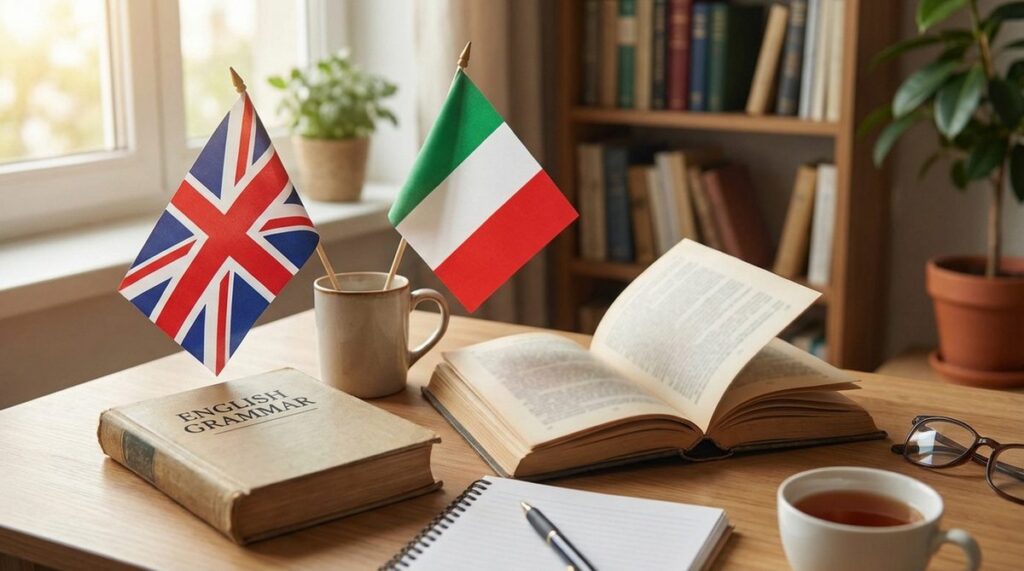
La formazione dei comparativi e dei superlativi è uno degli argomenti più importanti della grammatica inglese. Conoscere le regole e le eccezioni permette di costruire frasi corrette e di affrontare con sicurezza esercizi e prove scritte. Questa guida raccoglie tutte le informazioni essenziali in modo chiaro e organizzato.
Le regole di formazione
Aggettivi brevi (una sillaba)
Per gli aggettivi di una sillaba si aggiunge -er per il comparativo e -est per il superlativo. Il superlativo è sempre preceduto dall’articolo the.
| Aggettivo | Comparativo | Superlativo |
|---|---|---|
| tall (alto) | taller | the tallest |
| old (vecchio) | older | the oldest |
| fast (veloce) | faster | the fastest |
| cheap (economico) | cheaper | the cheapest |
| small (piccolo) | smaller | the smallest |
Regole ortografiche da ricordare:
- Se l’aggettivo termina in -e, si aggiunge solo -r / -st: large → larger → the largest.
- Se termina in consonante + vocale + consonante, si raddoppia l’ultima consonante: big → bigger → the biggest, hot → hotter → the hottest.
- Se termina in -y, la y diventa i: happy → happier → the happiest.
Aggettivi di due sillabe che terminano in -y
Seguono la stessa regola degli aggettivi brevi, con il cambio da -y a -ier / -iest:
| Aggettivo | Comparativo | Superlativo |
|---|---|---|
| easy (facile) | easier | the easiest |
| happy (felice) | happier | the happiest |
| busy (occupato) | busier | the busiest |
| funny (divertente) | funnier | the funniest |
Aggettivi lunghi (due o più sillabe)
Per gli aggettivi più lunghi si usa more per il comparativo e the most per il superlativo. L’aggettivo resta invariato.
| Aggettivo | Comparativo | Superlativo |
|---|---|---|
| beautiful (bello) | more beautiful | the most beautiful |
| expensive (costoso) | more expensive | the most expensive |
| interesting (interessante) | more interesting | the most interesting |
| comfortable (comodo) | more comfortable | the most comfortable |
| important (importante) | more important | the most important |
Le forme irregolari
Alcuni aggettivi molto comuni hanno forme completamente irregolari che non seguono nessuna regola e vanno memorizzate:
| Aggettivo | Comparativo | Superlativo |
|---|---|---|
| good (buono) | better | the best |
| bad (cattivo) | worse | the worst |
| far (lontano) | farther / further | the farthest / the furthest |
| little (poco) | less | the least |
| much / many (molto/i) | more | the most |
| old (vecchio, in famiglia) | elder | the eldest |
La forma elder/eldest si usa quasi esclusivamente per indicare l’ordine di nascita in famiglia: my elder brother (mio fratello maggiore). In tutti gli altri contesti si preferisce older/oldest.
Esempi in contesto
- My brother is taller than me. — Mio fratello è più alto di me.
- This is the most interesting book I have ever read. — Questo è il libro più interessante che abbia mai letto.
- Today the weather is worse than yesterday. — Oggi il tempo è peggiore di ieri.
- She is the best student in the class. — È la migliore studentessa della classe.
- This exercise is easier than the previous one. — Questo esercizio è più facile del precedente.
- Gold is more expensive than silver. — L’oro è più costoso dell’argento.
Gli errori più comuni
- Usare “more” con aggettivi brevi:
more tall→ taller. La regola vale anche al contrario: non si aggiunge -er ad aggettivi lunghi. - Aggiungere -er ad aggettivi lunghi:
beautifuler→ more beautiful. - Dimenticare “the” con il superlativo:
She is best→ She is the best. Il superlativo richiede sempre l’articolo determinativo. - Confondere “than” e “then”: nel comparativo si usa sempre than (non “then”, che significa “allora/poi”).
- Usare il doppio comparativo:
more better→ better. Non si combinano “more” e la forma in -er.
Frasi per esercitarsi
Completare le frasi con la forma corretta dell’aggettivo tra parentesi:
- This car is __________ (fast) than that one.
- Mount Everest is __________ (high) mountain in the world.
- My homework is __________ (difficult) than yours.
- Pizza is __________ (good) food in the world!
- Winter is __________ (cold) season of the year.
- This film is __________ (boring) than the one we saw last week.
Soluzioni
- faster
- the highest
- more difficult
- the best
- the coldest
- more boring
Per approfondire altri aspetti della grammatica, è possibile consultare la guida sui complementi diretti e indiretti in italiano, utile anche per il confronto tra le strutture delle due lingue. Altre risorse didattiche sono disponibili nella sezione Lingue. Per approfondire, consulta anche le espressioni matematiche per la quinta elementare. Per approfondire, consulta anche le riforme del sistema educativo.